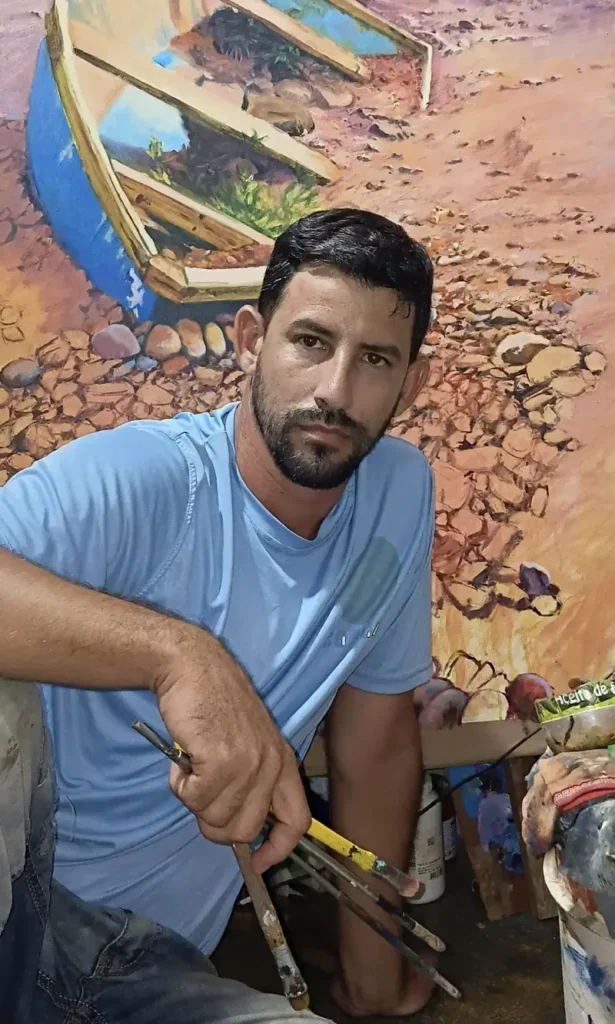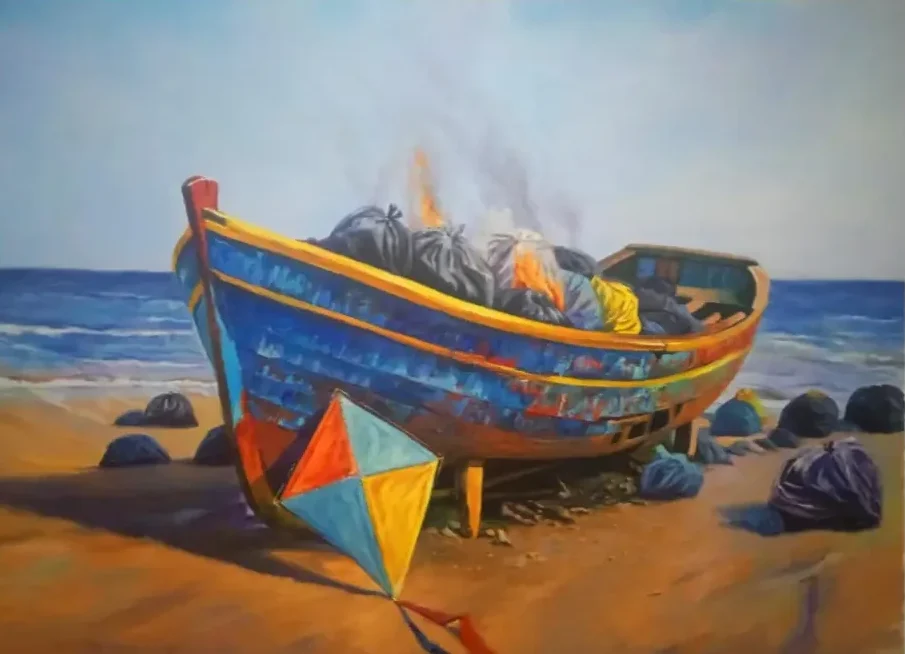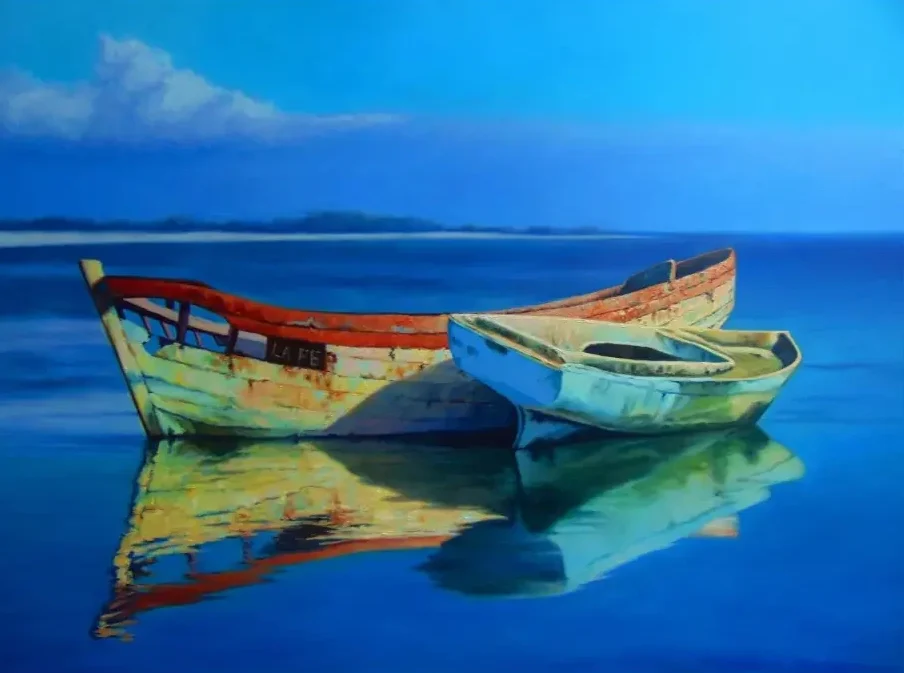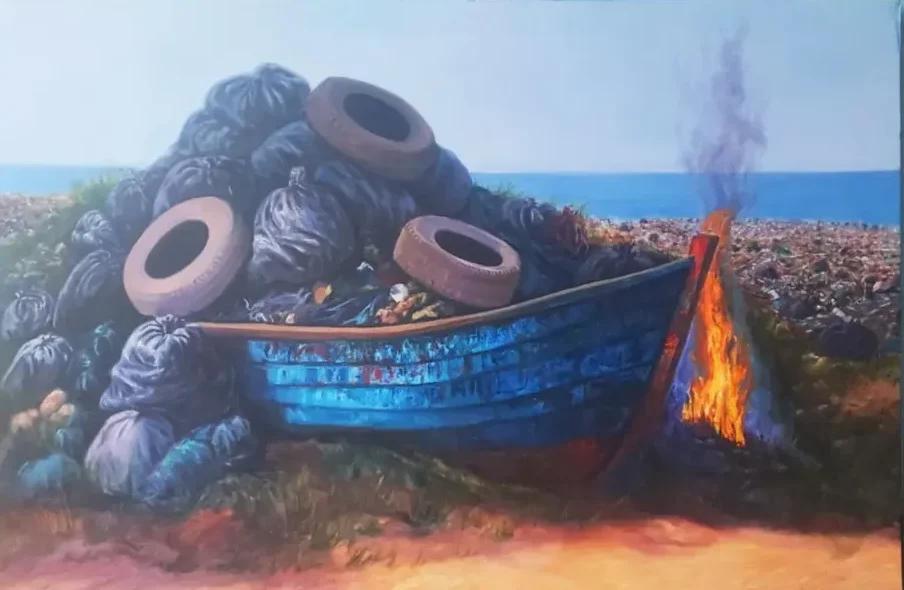
Juan Manuel Velázquez Fernández is a Cuban artist whose works have been exhibited in Cuba, Spain, and Latin America. His symbolically charged landscapes reflect the loss of natural refuges and explore themes of personal perception, protection, and spiritual renewal.
Juan Manuel Velázquez Fernández was born on June 18, 1987, in the province of Las Tunas, Cuba. He grew up in the fishing village of Puerto de Manatí (Las Tunas Province), in a family of fishermen, which allowed him as a child to experience the rural landscapes, the sea, and nature that would later shape his work.
At the age of 12, he began taking visual arts workshops at the Manatí House of Culture under the guidance of Raúl Albariño. In 2002, after completing secondary school, he held his first solo exhibition. In 2006, upon finishing high school, he joined the National Group of Miniaturists of Cuba in Las Tunas and the “Perspectivas” project.
His painting is described as realist, with a strong presence of the Cuban landscape and its atmosphere. In his own words: “I love all of Cuba’s nature.” His work is influenced by Cuban masters such as Leopoldo Romañach Guillén and Armando Menocal, as well as by Spanish painters Joaquín Sorolla and Valentín Sanz Carta.
Work and Style
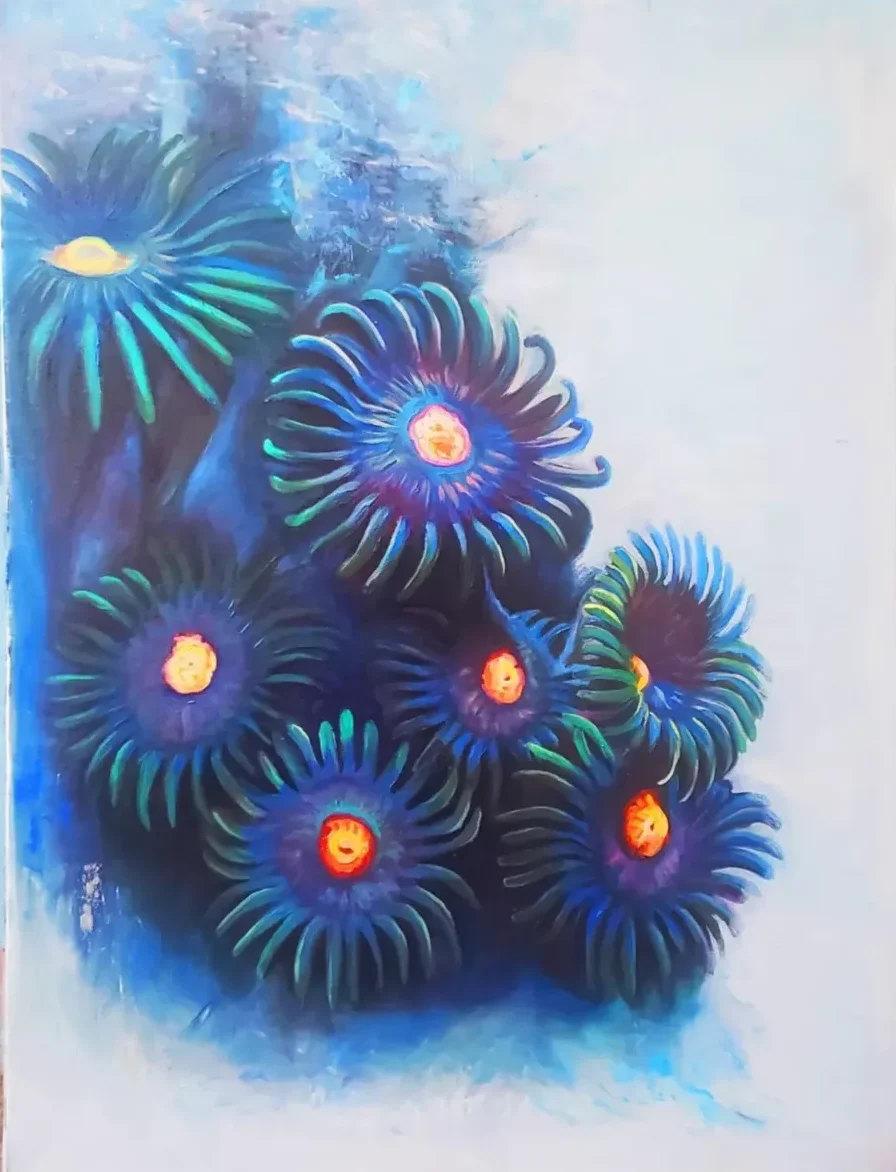
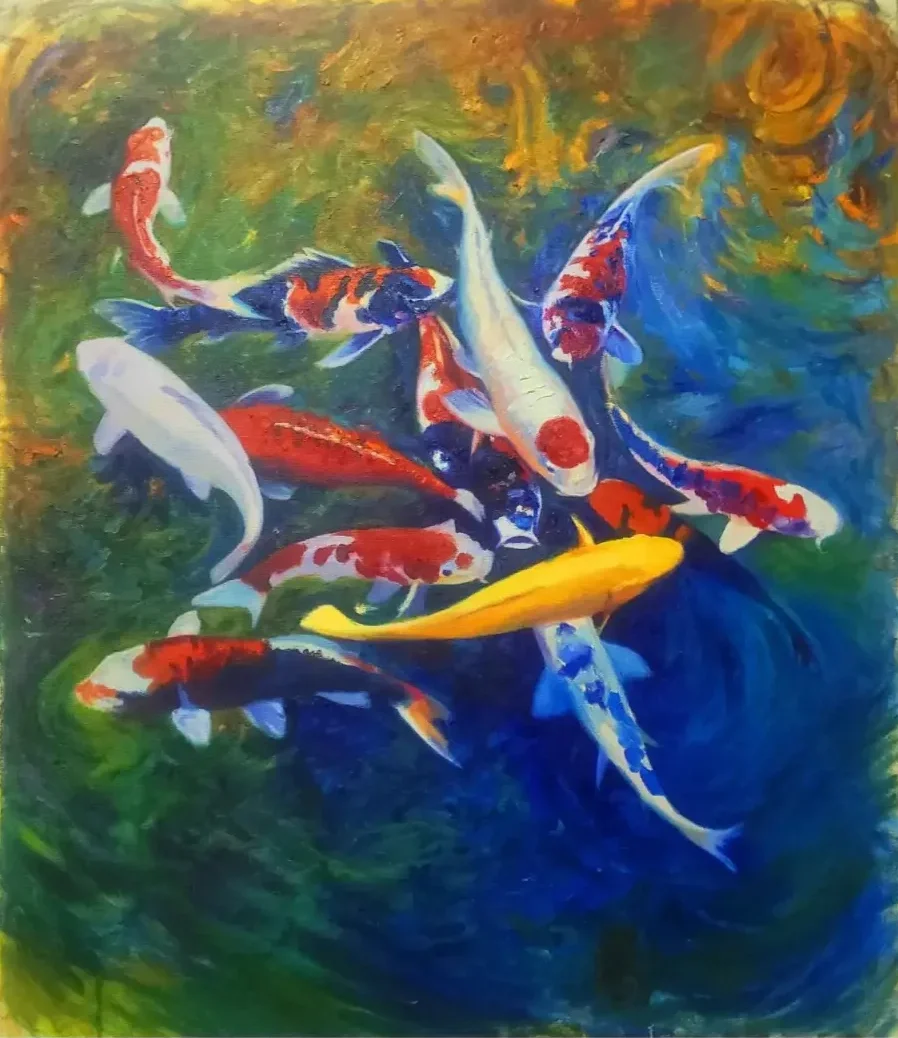
Velázquez Fernández mainly works with oil on canvas. His recurring subjects include the Cuban countryside, seascapes, fields, and elements of nature — capturing “lived moments” rather than merely decorative scenes. He is distinguished by his use of color, deeply inspired by the Cuban landscape, and by a brushstroke that alternates between looseness and precision — as if each painting were “a diary written with a brush.”